I lost everything because of my DIL’s greed. I started driving Uber to survive. Every Wednesday, I drove a billionaire to the airport. One day he tipped me $10.000 and said: “You remind me of someone I lost.” A week later, his lawyer contacted me: “He passed away and updated his will.” I inherited $260 million. The reason made me cry…
My name is Dela, and at 63 years old, I never imagined I’d be sitting in a courthouse watching my entire life slip away because of a signature I trusted my own family with.
“Mrs. Henderson, do you understand what you’ve signed?”
The lawyer’s voice felt distant, like I was underwater. The papers in front of me might as well have been written in a foreign language.
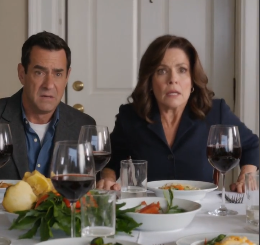
All I could focus on was my daughter-in-law’s satisfied smile as she sat beside my son Marcus in the front row.
3 months earlier, Aara had approached me with tears in her eyes.
“Dela, we’re in trouble,” she’d said, clutching my hand in my kitchen. “Marcus’s business is failing and we might lose everything. The bank is threatening foreclosure on our house where the kids live.”
I remember how my heart achd for them. Ara had always been dramatic, but seeing her genuinely distressed made me want to help immediately.
“What can I do, sweetheart?”
“We need to consolidate our assets temporarily,” she explained, spreading official looking documents across my dining table. “If we put your house as collateral for a business loan, we can save everything. It’s just paperwork, Dela. Just until we get back on our feet.”
I should have called my own lawyer. I should have asked more questions. But when your son looks at you with desperate eyes and says, “Mom, please. You’re our only hope.” What grandmother says no?
The house had been mine for 37 years. Robert and I had bought it when Marcus was just five, scraping together every penny for the down payment.
We’d painted every room together, planted the rose garden, built the deck where we spent countless summer evenings. After Robert died 8 years ago, that house became my sanctuary, filled with memories and the security I’d worked my entire life to achieve.
But I signed those papers anyway because I trusted them, because I loved them.
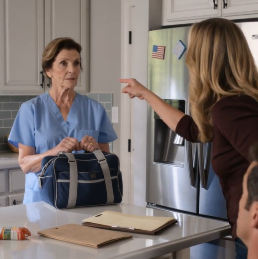
3 weeks later, knocked on my door with a different expression entirely. Gone were the tears and desperation. In their place was something cold, almost business-like.
“Dela, we need to talk,” she said, not waiting for an invitation before walking into my living room. “There’s been a development with the house situation.”
My stomach dropped.
“What kind of development?”
She handed me a thick envelope.
“The paperwork you signed wasn’t just for collateral. You actually transferred ownership to us. We’re selling the house.”
The words hit me like a physical blow.
“What do you mean transferred ownership? You said it was temporary.”
“I said we needed to consolidate assets. The house is an asset.”
Her tone was matter of fact, like she was explaining something obvious to a child.
“Marcus and I have decided it’s better to sell and invest the money in the business properly.”
I felt me legs give out. I sank onto my couch, the same couch where I’d rocked Marcus to sleep as a baby, where Robert and I had shared morning coffee for decades.
“Elra, this is my home. Where am I supposed to live?”
She shrugged. Actually shrugged.
“You’ll figure something out. You’re resourceful.”
When I called Marcus, my voice shaking with disbelief, his response was even worse than his wife’s coldness.
“Mom, I’m sorry, but handled the legal stuff. If that’s what the papers say, that’s what they say. We can’t afford to keep supporting your lifestyle anyway.”
Supporting my lifestyle.
I’d been supporting theirs for years. Every birthday, every Christmas, every time they needed car repairs or help with the grandkids school expenses, the irony was suffocating.
The realtor arrived the next day, a perky woman in her 30s who kept talking about market value and quick sales while I stood in my kitchen feeling like a ghost in my own home.
“We should have this sold within 2 weeks,” she announced cheerfully. “The market’s hot right now.”
2 weeks.
37 years of my life, reduced to a two-week transaction.
I found a tiny studio apartment on the other side of town in a building that smelled like cigarettes and had questionable stains on the hallway carpet. The rent was $800 a month, nearly half of my social security check.
After utilities and groceries, I had maybe $200 left each month. My retirement savings, what little I had, wouldn’t last 6 months at this rate.
That’s when I saw the advertisement.
Drive with UberX. Be your own boss. Flexible hours.
I’d never driven professionally before. Hell, I’d barely driven outside my own neighborhood until Robert died.
But desperation makes you brave in ways you never expected.
The orientation was held in a cramped office downtown filled mostly with people half my age. The instructor, a kid who couldn’t have been older than 25, looked at me like I was someone’s grandmother who’d wandered into the wrong building.
“Ma’am, are you sure about this?” he asked during the break. “It can be pretty demanding work.”
I straightened my shoulders, drawing on a strength I wasn’t sure I still possessed.
“I’m sure.”
My first week was a disaster. I got lost three times, couldn’t figure out the app properly, and had one passenger leave a one-star review because I drove too slowly on the highway.
But I needed this to work. I had no choice.
By the end of the second week, I’d found my rhythm. I learned the best routes, the busiest times, how to make small talk with passengers who wanted conversation, and respect the silence of those who didn’t.
Most importantly, I learned to swallow my pride and keep driving, even when my back achd and my fingers cramped from gripping the steering wheel.
The hardest part wasn’t the physical demands or the unpredictable income. It was the isolation.
For the first time in my adult life, I was truly alone.
Marcus had stopped calling entirely after I moved out. Ara had blocked my number when I tried to arrange visits with my grandchildren.
My neighbors in the new building were strangers, and I felt too ashamed to reach out to old friends who might ask why I’d moved from my beautiful house to this depressing apartment.
Some nights, I’d sit in my car after my last ride, parked outside the grocery store or a gas station, and just cry.
Not the dramatic sobbing you see in movies, but the quiet, desperate tears of someone who’s lost everything and doesn’t know how to rebuild.
I kept thinking about Robert, about what he would say if he could see me now. He’d always been the optimist in our marriage, the one who believed everything would work out.
“Life has a way of surprising you, Dela,” he used to say. “Just when you think it’s over, something unexpected happens.”
I hoped he was right because, sitting in that parking lot, watching other families drive home to houses they owned, to lives they controlled, I felt like my story was already finished.
I was wrong about that, though. I wouldn’t realize it for several more weeks.
Sometimes the most important chapters of your life begin when you think the book is closing.
It was a Wednesday morning in early October when I first picked him up. The leaves were just beginning to turn, and there was that crisp quality to the air that made everything feel sharper, more defined.
I’d been driving for Uber for about 6 weeks by then, and I was starting to recognize the patterns of my regular passengers.
The request came through at exactly 9:15 in the morning.
Pick up at the Grand View Hotel downtown. Destination Ronald Reagan Washington National Airport.
The passenger’s name was listed simply as El Morrison.
I pulled up to the hotel’s circular drive, scanning for my passenger. The Grand View was one of those old money establishments where the doormen wore white gloves and the lobby smelled like expensive leather and fresh flowers.
Not exactly the kind of place where most of my passengers stayed.
He emerged from the hotel entrance and I recognized him immediately as someone who belonged there. Tall, probably in his late 60s, with silver hair that was perfectly styled despite the early hour.
His suit was the kind you see in magazines, dark charcoal with a subtle pinstripe that probably cost more than I made in 3 months.
But what struck me most was his face.
Even from a distance, there was something deeply sad about his expression.
“Mrs. Henderson.”
His voice was cultured, with just a hint of an accent I couldn’t quite place.
“I’m Lionel Morrison.”
“Please call me Dela,” I said as he settled into the back seat.
“Empfort, right?”
“Yes, thank you.”
I expected him to pull out his phone like most passengers, or perhaps make small talk about the weather. Instead, he sat quietly, his hands folded in his lap, staring out the window.
Every so often, I’d catch him watching me in the rearview mirror, but when our eyes met, he’d quickly look away.
The drive to the airport typically took about 45 minutes, depending on traffic. We made the entire trip in virtual silence.
When I pulled up to the departure terminal, he handed me a $50 bill for what should have been a $28 fair.
“Sir, this is too much,” I protested.
“Keep it,” he said simply. “Same time next week?”
I blinked in surprise.
“You want to schedule a regular ride?”
“If that’s possible. Every Wednesday, 9:15 a.m.”
“Of course. I’ll make sure I’m available.”
He paused with his hand on the door handle, turning back to look at me directly for the first time. His eyes were the most unusual shade of blue gray, like storm clouds over the ocean.
“Thank you, Dela. You drive very carefully. It’s comforting.”
After he left, I sat in the passenger pickup area for a few minutes, puzzled by the interaction.
In my weeks of driving, I’d had all kinds of passengers, chatty businessmen, teenagers headed to parties, elderly couples going to medical appointments, but none of them had affected me quite like this man.
There was something about his sadness that resonated with my own.
The following Wednesday, he was waiting outside the hotel at exactly 9:15, wearing a different suit, but the same melancholy expression.
This time, I noticed he carried a small wooden box about the size of a jewelry case, which he held carefully in his lap throughout the drive.
“Business trip?” I ventured, hoping to draw him into conversation.
“Something like that,” he replied, his fingers tightening around the box.
Again, we drove mostly in silence, but I found myself stealing glances at him in the mirror.
There was something familiar about his profile, though I couldn’t place what it was. Maybe it was just that he reminded me of Robert in some way, that same dignified bearing that comes with age and experience.
This pattern continued for weeks.
Every Wednesday, 9:15 sharp, Lionel Morrison would be waiting outside the Grand View Hotel. Every Wednesday, he’d sit quietly in my back seat.
Sometimes with the wooden box, sometimes without, always lost in his own thoughts.
And every Wednesday, he’d tip me far more than the ride was worth, always with that same careful politeness.
By the fourth week, I’d started looking forward to these Wednesday trips in a way that surprised me.
Not because of the generous tips, though those certainly helped my struggling budget, but because there was something soothing about his presence.
He never asked personal questions about why a woman my age was driving Uber. He never made me feel like I was being judged or pied.
He simply existed in my space with a kind of respectful melancholy that matched my own.
I began to notice small details about him.
The way he always checked his watch before getting in the car, as if timing was crucial. The careful way he positioned himself in the seat, always in the exact center, never touching the windows or doors. The fact that he never carried luggage, despite these apparent trips to the airport.
One particularly rainy Wednesday, I watched in my rearview mirror as he sat with his eyes closed, his fingers tracing the edges of that wooden box.
His lips were moving slightly, as if he were having a conversation with someone who wasn’t there.
“Are you all right, Mr. Morrison?” I asked gently.
His eyes opened, and for a moment, he looked startled, as if he’d forgotten where he was.
“Yes, I’m fine. Thank you for asking.”
“You know,” I said, surprising myself with my boldness. “If you ever want to talk about whatever is bothering you, I’m a good listener. Comes with the job, I suppose.”
He was quiet for so long that I thought he hadn’t heard me.
Then, just as we were pulling up to the airport, he said, “You have kind eyes, Dela. Has anyone ever told you that?”
The comment caught me off guard.
“I thank you.”
“They remind me of someone I knew a long time ago.”
His voice was barely above a whisper.
“Someone I should have fought harder to keep.”
Before I could respond, he was out of the car, moving through the terminal entrance with that same purposeful stride.
But this time, I noticed he looked back once before disappearing through the automatic doors.
That night, lying in my narrow bed in the studio apartment, I found myself thinking about Lionel Morrison.
There was clearly a story there, some deep pain that brought him to my car every Wednesday morning. I recognized the signs because I was living with my own version of loss and regret.
I started paying closer attention to the news, wondering if I might see his name mentioned in business articles or society pages. A man who stayed at the Grand View and wore suits that expensive had to be somebody important.
But I never found any mention of Lionel Morrison anywhere.
It was during the seventh week of our Wednesday routine that something shifted.
As usual, he slid into the back seat at precisely 9:15, but this time he didn’t have the wooden box. Instead, he carried what looked like an old photograph.
“Dela,” he said, his voice different somehow, more purposeful than usual. “May I ask you something personal?”
My hands tightened on the steering wheel.
“Of course.”
“Have you ever lost someone you loved because you were too proud or too scared to fight for them?”
The question hit me like a physical blow.
I thought about Robert, about our early years when I almost lost him because I was afraid to trust that someone could really love me.
I thought about Marcus, about how I’d failed to fight when started driving a wedge between us.
I thought about all the ways pride and fear had shaped my life.
“Yes,” I said simply. “I have.”
He nodded slowly, as if my answer confirmed something he already knew.
“So have I. And I’ve spent 45 years wondering what my life might have been like if I’d been braver.”
45 years.
The number echoed in my mind as we continued toward the airport.
What had happened 45 years ago that still haunted this man? And why did he choose to share that pain with me? A stranger who drove him to the airport once a week.
I was about to find out that sometimes strangers aren’t really strangers at all.
It was the Wednesday before Thanksgiving, and the morning had an unusual quality to it. The sky was that particular shade of gray that promises snow, and there was a stillness in the air that made everything feel suspended, waiting.
I arrived at the Grand View Hotel at 9:10, 5 minutes early, as had become my habit.
Lionel was already waiting outside, but something was different about him today. His usual impeccable posture seemed slightly diminished, and he moved more slowly than usual.
When he approached the car, I noticed his hands were shaking slightly.
“Good morning, Dela,” he said as he settled into the back seat.
His voice was softer than usual, almost fragile.
“Good morning, Mr. Morrison. Are you feeling all right?”
He paused, considering the question more seriously than I’d expected.
“I’ve been better,” he admitted. “But I’m glad it’s today. Glad. Glad that if this is my last Wednesday, it’s with you.”
A chill ran down my spine that had nothing to do with the weather.
“What do you mean, your last Wednesday?”
He didn’t answer directly.
Instead, he leaned forward slightly, and I could see him more clearly in the rearview mirror.
His eyes had that same storm cloud color, but today they seemed brighter somehow, as if lit from within by some internal fire.
“Dela, may I tell you about someone I loved once?”
I nodded, not trusting my voice.
Something about his tone made me understand that this wasn’t going to be casual conversation.
“Her name was Dela Rose,” he began.
And my heart stopped.
Rose was my middle name. My maiden name was Rose.
But surely it was just a coincidence.
“She was 17 when I met her, and I was 18. It was the summer of 1978.”
I was 17 in 1978.
My mouth went dry.
“She worked at her father’s diner in a small town outside Richmond,” he continued, his voice taking on a dreamy quality. “I was there for the summer, working construction to earn money for college. Every morning, I’d go to that diner for coffee and toast, and she’d serve me with this smile that could light up the entire room.”
I pulled into the right lane, my hands trembling on the steering wheel.
“This couldn’t be happening. This couldn’t be real.”
“She had the most beautiful dark hair, always pulled back in a ponytail. And these eyes, God, those eyes, brown like autumn leaves with little gold flexcks that caught the light when she laughed.”
He paused, and I heard him take a shaky breath.
“She had a small scar on her left hand from where she’d cut herself on a broken glass when she was 12.”
My left hand involuntarily moved to cover the small scar on my palm.
The scar I’d gotten when I was 12, helping my father clean up after some teenagers had broken a window at the diner.
“We fell in love that summer,” Lionel continued, his voice growing more emotional. “Real love, the kind that changes you forever. We’d meet after her shifts, walk by the river, talk about everything and nothing. She wanted to be a teacher. I was going to study business and take over my father’s company someday.”
I had to pull over.
My vision was blurring and I couldn’t concentrate on driving.
I steered into a gas station parking lot and put the car in park, my whole body shaking.
“Sir,” I whispered, “what was her last name?”
“Rose. Dela Rose, the most beautiful name I’d ever heard.”
I turned around in my seat to face him directly, and when our eyes met, I saw the recognition dawn on his face at the same moment it hit me like a physical blow.
“David.”
The name came out as barely a whisper.
He closed his eyes, tears streaming down his cheeks.
“Hello, Dela Rose.”
David.
David Morrison, who had worked construction that magical summer when I was 17.
David, who had promised to come back for me after his first year of college.
David, who had kissed me goodbye on a September evening and said he’d write every day.
David, who had simply vanished from my life without explanation, leaving me heartbroken and wondering what I’d done wrong.
“You said your name was Lionol,” I managed to say.
“Lionel is my middle name. I started using it after after everything fell apart with my family. David was the boy who loved you. Lionol is the man who lost you.”
I felt like I was drowning.
45 years.
45 years of wondering what had happened to my first love, of comparing every other man to the memory of that 18-year-old boy who had made me believe in fairy tales.
And here he was sitting in the back of my Uber, having been my passenger for 2 months without either of us realizing who the other was.
“Why didn’t you come back?”
The question burst out of me, carrying decades of hurt.
“You promised you’d come back.”
His face crumpled.
“I tried. God, Dela, I tried. My father found out about you. About us. He said a rose girl wasn’t good enough for a Morrison. He threatened to cut off my college funding to disown me completely if I ever saw you again.”
“So, you chose your family over me.”
“No.”
His voice was fierce now.
“I chose to make something of myself so I could come back and prove him wrong. I worked twice as hard, graduated early, started building my own business. It took me 3 years, but I did it. I became successful enough that his opinion didn’t matter anymore.”
“3 years?”
I felt like he’d slapped me.
“I waited for 3 years, David. I turned down dates, turned down proposals, because I believed you were coming back.”
“I did come back,” he said quietly. “In the spring of 1981, I drove to the diner, ready to beg your forgiveness and ask you to marry me. I had a ring and everything.”
My heart clenched.
Spring of 1981 was when I’d married Robert.
A rebound marriage that I’d talked myself into because I was tired of waiting for a ghost.
“I saw you through the window,” David continued. “You were showing off your engagement ring to the other waitresses. You looked so happy, so radiant, and I realized I was too late.”
“You could have talked to me. You could have explained.”
“And ruined your happiness? You’d found someone who was there when you needed him. Someone who didn’t disappear for 3 years chasing dreams.”
He shook his head.
“I loved you too much to destroy that.”
We sat in silence for a long moment.
Both of us crying openly now.
45 years of missed chances, of lives lived in parallel without ever touching.
“I watched you get married,” he admitted. “I stood in the back of the church and watched you walk down that aisle, and then I left town and never came back.”
“David…”
I didn’t know what to say.
How do you process a lifetime of whatifs in a single conversation?
“I never married,” he said simply. “I built my business, made more money than I knew what to do with, traveled the world, but I never found anyone who made me feel the way you did that summer.”
“I had a good marriage,” I said, needing him to know. “Robert was a good man. We were happy.”
“I’m glad,” he said.
And I could tell he meant it.
“I’m glad you were happy. That’s all I ever wanted for you.”
“How did you find me? How did you know to request me as your driver?”
He reached into his jacket and pulled out his phone.
“I’ve been keeping track of you, Dela. Not in a creepy way,” he added quickly. “Just making sure you were okay. When I saw your husband’s obituary 8 years ago, I thought about reaching out, but I didn’t want to intrude on your grief, but the Uber requests. I hired a private investigator to find you after I got sick. When I learned you were driving for Uber, I figured out how to request you specifically.”
He smiled sadly.
“I told myself I just wanted to see you once to make sure you were all right. But once wasn’t enough. It’s never been enough with you.”
“You got sick?”
He nodded, his expression growing serious.
“Pancreatic cancer, stage four. The doctors give me a few weeks, maybe a month if I’m lucky.”
The words hit me like a physical blow.
“David, no.”
“It’s all right,” he said gently. “I’ve made my peace with it. But I wanted to see you one more time. I wanted to tell you that loving you was the best thing I ever did. Even if I did it badly.”
He reached into his pocket and pulled out an envelope, thick and heavy.
“This is for you.”
“David, I can’t take your money.”
“It’s not money. Well, not exactly.”
He pressed the envelope into my hands.
“Please, just take it. You’ll understand when you open it.”
I looked down at the envelope, my hands shaking.
When I looked up again, his eyes were intense, desperate.
“You reminded me what it felt like to be alive again,” he said. “These past two months sitting in your car, listening to your voice, watching you in the mirror, it was like getting pieces of my soul back.”
“David…”
“I know it’s too late for us. I know we can’t go back, but I needed you to know that you were loved, Dela Rose. You were loved completely and forever by someone who never stopped thinking about you.”
He opened the car door and panic seized me.
“Wait, where are you going? When will I see you again?”
He turned back, and his smile was radiant despite his tears.
“You won’t. This is goodbye, my love. But it’s not an ending. It’s just a pause until we meet again.”
And then he was gone, walking across the parking lot with that same purposeful stride, disappearing into the crowd of travelers at the airport entrance.
I sat in my car, clutching the envelope, watching until I couldn’t see him anymore.
It wasn’t until I got home that night that I finally opened the envelope.
Inside was a check for $10,000 and a note in handwriting I still remembered after all these years.
“For the woman who taught me what love really means. Use this to take care of yourself the way I should have taken care of you. Forever yours, David.”
At the bottom of the envelope was a small velvet box.
Inside was a simple solitire engagement ring. Obviously vintage, obviously expensive.
The note with it said, “I bought this in 1981. I’ve carried it ever since.”
I cried that night like I hadn’t cried since Robert died.
Not just for David, but for all the years we’d lost. All the chances we’d missed. All the whatifs that would never become realities.
I had no idea that this was just the beginning.
The call came exactly one week after my last ride with David.
I was sitting in my tiny studio apartment, still wearing the engagement ring he’d given me on a chain around my neck, still processing the fact that my first love had been my Wednesday passenger for 2 months without either of us knowing it.
“Mrs. Henderson.”
The voice on the phone was crisp, professional.
“This is Harrison Blackwell from Blackwell Stone and Associates. I’m calling regarding the estate of David Lionol Morrison.”
My heart stopped.
“Is he?”
“I’m very sorry to inform you that Mr. Morrison passed away peacefully 3 days ago. He’s left specific instructions regarding you in his will.”
The phone slipped from my hand, clattering onto the small table.
David was gone.
Really truly gone.
I’d known he was dying, but somehow I’d convinced myself that maybe the doctors were wrong. Maybe there was more time.
“Mrs. Henderson, are you still there?”
I picked up the phone with trembling fingers.
“Yes, I’m here.”
“Mister Morrison has requested that you come to our offices as soon as possible. There are some documents you need to review and sign. Would tomorrow morning at 10:00 work for you?”
“I don’t understand. Why would David… Why would Mr. Morrison leave me anything? We were just…”
I couldn’t finish the sentence.
How do you explain a lifetime of love and loss to a stranger?
“Ma’am, I think it would be best if we discussed this in person. The address is 2000 Connecticut Avenue, Sweet 800. Please bring photo identification.”
That night, I barely slept.
I kept thinking about David’s words in the car.
“You reminded me what it felt like to be alive again.”
Had he planned this even then? Had he known that our Wednesday drives were leading to something bigger?
The law office was in one of those gleaming downtown buildings that screamed money and power.
The receptionist, a polished young woman who probably made more in a month than I made in three, directed me to a conference room where Mr. Blackwell was waiting.
Harrison Blackwell looked exactly like what central casting would order for a high-powered estate attorney. Silverhaired, expensive suit, wire-rimmed glasses, but his expression was kind as he stood to greet me.
“Mrs. Henderson, thank you for coming. Please have a seat.”
The conference room was intimidating with its massive mahogany table and floor to ceiling windows overlooking the city.
I felt out of place in my best dress, which suddenly seemed shabby in these surroundings.
“Before we begin,” Mr. Blackwell said, settling across from me with a thick folder, “I want you to know that I handled Mr. Morrison’s affairs for over 20 years. In all that time, I never saw him as emotional about anything as he was when he changed his will 6 weeks ago.”
6 weeks ago.
That would have been right around the time David started taking regular rides with me.
“Yes. He came in specifically to add you as his primary beneficiary. He was very clear about his wishes. Even though I advised him to take more time to consider such a significant change…”
Mr. Blackwell opened the folder and spread several documents across the table.
“Mrs. Henderson, Mr. Morrison has left you the bulk of his estate.”
“I’m sorry. What?”
“The total value is approximately $260 million.”
The words hit me like a physical blow.
I actually felt dizzy.
“That’s impossible. There must be some mistake.”
“There’s no mistake. Mr. Morrison was very explicit in his instructions.”
He slid a document toward me.
“This is a letter he wrote specifically for you.”
With shaking hands, I unfolded the letter.
It was handwritten in David’s careful script.
“My dearest Dela Rose, if you’re reading this, then I’m gone and you’re probably in shock. Please don’t be. This isn’t charity or guilt or some grand romantic gesture. This is simply me making sure that the woman I’ve loved for 45 years is taken care of the way she should have been all along.
I know you’ll think this is too much, that you don’t deserve it. But you’re wrong. You deserve everything good in this world and more. You deserve security and comfort and the freedom to live without fear.
I’ve spent the last 45 years building wealth I never needed. Success I never truly enjoyed because none of it meant anything without you to share it with.
Money can’t buy back the years we lost. But maybe it can give you the years you have left.
Please don’t feel guilty about taking this. It’s mine to give and you’re the only person I’ve ever wanted to give it to.
Use it wisely. Use it freely. Use it to be happy. That’s all I ever wanted for you.
I love you, Dela Rose. I’ve loved you since that first morning at your father’s diner. And I’ll love you until the stars burn out.
Forever yours, David.”
I was crying so hard I could barely see the paper.
Mr. Blackwell handed me a box of tissues and waited patiently while I composed myself.
“This is insane,” I finally managed. “I can’t accept this.”
“Mrs. Henderson. The will is ironclad. Mr. Morrison was very thorough. He anticipated that you might have reservations, which is why he included this.”
He handed me another document.
This one was typed, clearly prepared by the law firm.
“To whom it may concern. Dela Rose Henderson has been the love of my life for 45 years. The fact that circumstances kept us apart does not diminish the depth of my feelings for her or my desire to ensure her welfare.
Every penny of this inheritance has been earned legally and ethically through my business ventures. I have no living relatives who need or deserve this money more than Mrs. Henderson does.
Any attempt to contest this will should be met with the full force of this law firm. This is my money earned through my labor, and I am of sound mind and body when making this bequest.
Mrs. Henderson may feel overwhelmed by the magnitude of this gift, but I want her to understand that it represents a lifetime of love that I was never able to express properly. Please help her understand that accepting this inheritance would be honoring my memory, not taking advantage of it.
Sincerely, David Lionel Morrison.”
“But surely he had family,” I protested. “Business partners, friends, charities he supported.”
Mr. Blackwell shook his head.
“Mr. Morrison was essentially a hermit for the last 20 years. He had business associates but no close friends. His parents died long ago and he was an only child. He did make provisions for his household staff and a few charitable donations, but the vast majority goes to you.”
“I don’t understand how someone accumulates this much money.”
“Mr. Morrison was brilliant at real estate investment and development. He bought properties in emerging markets decades before they became valuable. His portfolio includes commercial buildings in 12 major cities, residential developments, and substantial stock holdings.”
I felt like I was underwater, struggling to process information that seemed impossible.
$260 million.
The number was so large it didn’t feel real.
“What happens now?” I asked weekly.
“Well, there are taxes to consider, but given the size of the estate, you’ll still receive approximately $180 million after all obligations are met. The properties will need to be managed or sold according to your preferences. Mr. Morrison has suggested several investment firms that could help you.”
$180 million.
Even after taxes, it was more money than I could comprehend.
“There’s one more thing,” Mr. Blackwell said gently. “Mr. Morrison left specific instructions about how he wanted this handled in the media. He was a very private person and didn’t want a circus surrounding his death or this inheritance. He’s arranged for everything to be handled as discreetly as possible.”
“I need time to think about this.”
“Of course, but Mrs. Henderson, I do need to tell you something else. Mr. Morrison hired a private investigator to look into your current situation. He was aware of what happened with your house, with your family.”
My cheeks burned with shame.
“He knew about Aara?”
“He knew that you were taken advantage of by people who should have protected you. He specifically mentioned that this inheritance should allow you to, and I quote, show certain people exactly what they gave up when they chose greed over love.”
The thought of David knowing about my humiliation, about how my own son had let his wife steal my home, was almost unbearable.
But there was something else in Mr. Blackwell’s tone. Something that suggested David had been angry on my behalf.
“He left one more letter,” Mr. Blackwell said, handing me a smaller envelope. “This one is about your family situation.”
Inside was a single sheet of paper.
“Dela, I know about the house, about your son and daughter-in-law. I know you’re driving Uber because you have no choice. Living in that awful apartment because they left you with nothing.
Part of me wants to destroy them for what they did to you. But I know you’re better than that, kinder than that.
So instead, I’m giving you the power to decide what happens next.
You have enough money now to buy any house you want, live anywhere you choose. You also have enough to help your family if you decide they deserve it, or to ensure they never have the power to hurt you again.
The choice is yours, my love. Choose wisely.
David.”
I sat in that conference room for another hour going through documents, listening to Mr. Blackwell explain trusts and investments and tax implications.
None of it felt real.
I kept expecting to wake up in my studio apartment to realize this was all some elaborate dream.
But it wasn’t a dream.
David was really gone, and he’d really left me enough money to transform not just my life, but the lives of everyone around me.
As I walked out of that gleaming office building, my head spinning with numbers and possibilities, I realized that David had given me something even more valuable than money.
He’d given me power.
The power to choose my own future, to decide who deserved my forgiveness and who didn’t.
For the first time in months, I felt like I was in control of my own story.
And I had some very important decisions to make.
I spent 3 days in my studio apartment staring at the legal documents spread across my tiny kitchen table, trying to process the reality of what had happened.
$260 million.
David Lionel Morrison, my first love, who had become my Wednesday passenger, who had died loving me after 45 years of separation.
On the fourth day, I called Marcus.
“Mom.”
His voice was surprised.
“We hadn’t heard from you in months. Ara was wondering if you were okay.”
Ara was wondering, not him, his wife.
“I need to see you,” I said simply. “Both of you. There’s something important I need to discuss.”
“Well, we’re pretty busy this week. The kids have soccer practice and book club.”
“Marcus.”
I used the tone I’d used when he was 7 years old and trying to avoid cleaning his room.
“This isn’t a request. I’ll be at your house tomorrow at 2:00.”
There was a long pause.
“Mom, you can’t just show up and make demands. We have lives.”
“Yes,” I said quietly. “I’m aware of how you view my place in those lives. 2:00 tomorrow.”
I hung up before he could argue.
That night, I sat on my narrow bed holding the engagement ring David had carried for 45 years.
The diamond caught the light from my single lamp, throwing tiny rainbows across the wall.
I thought about all the choices that had led to this moment.
My choice to trust.
David’s choice to stay away when he thought I was happy.
Marcus’ choice to prioritize his wife over his mother.
And now I had the ultimate choice to make.
The next afternoon, I pulled into the driveway of what used to be my house.
The roses I’d planted were gone, replaced with some modern landscaping that looked expensive and soulless.
Ara had painted the front door black instead of the warm blue Robert and I had chosen together.
Even the house looked like it no longer remembered me.
Marcus answered the door, and I was struck by how much older he looked.
There were lines around his eyes that hadn’t been there when I signed those papers, and his hair was thinning on top.
But his expression was the same mixture of guilt and defensiveness I’d seen the day I moved out.
“Hi, Mom. You look different.”
I was wearing the same dress I’d worn to the lawyer’s office, and I’d had my hair done that morning.
Small changes, but I felt different, too.
“Hello, Marcus.”
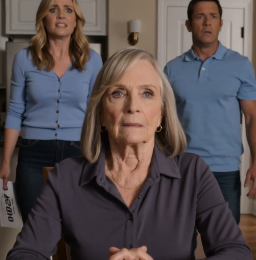
Ara appeared behind him, and I felt that familiar surge of anger.
She looked exactly the same. Perfectly styled blonde hair, designer clothes, that calculating expression she wore when she was trying to appear innocent.
“Dela,” she said with false enthusiasm. “What a surprise. You look wonderful. How’s the new apartment?”
“It’s adequate,” I said evenly. “May I come in, or do I need an invitation to enter my former home?”
Marcus stepped aside, his cheeks flushing.
“Mom, please don’t start.”
The interior of the house had been completely redone.
My furniture was gone, replaced with sleek, modern pieces that looked like they belonged in a magazine.
The family photos that had lined the mantle were gone, too.
It was as if 37 years of my life had been erased.
“The place looks different,” I observed.
“We thought it needed updating,” ara said, settling onto the white leather sofa that had probably cost more than my car. “More contemporary. You know, the old style was so dated.”
Dated like me.
“So,” Marcus said, perching uncomfortably on the edge of a chair. “What did you want to talk about?”
I sat down across from them, placing my purse carefully on the glass coffee table.
“I wanted to tell you about my week.”
They exchanged glances.
Clearly, this wasn’t what they’d expected.
“On Monday,” I began, “I inherited $260 million.”
The silence that followed was so complete I could hear the new modern clock ticking on the wall.
“I’m sorry. What?”
Allar’s voice was barely a whisper.
“You heard correctly. $260 million from a man named David Morrison, who turned out to be someone I knew many years ago.”
Marcus’ mouth was opening and closing like a fish.
“Mom, that’s… that’s impossible.”
“I thought so too, but I’ve spent the last 3 days with lawyers and accountants, and I can assure you it’s very real.”
Allah leaned forward, her eyes suddenly sharp and calculating.
“Dela, that’s wonderful. Of course, we’ll help you manage it. This kind of windfall can be overwhelming for someone who’s not used to—”
“Stop.”
My voice cut through her words like a blade.
“Just stop.”
She blinked, clearly taken aback by my tone.
“Do you think I’m stupid, Alara? Do you think I don’t see exactly what you’re doing right now?”
“I don’t know what you mean,” she said.
But her voice had lost that fake sweetness.
I turned to Marcus.
“And you? Do you have anything to say to me?”
He shifted uncomfortably.
“Mom, I… look, if there were misunderstandings about the house situation—”
“Misunderstandings?”
I stood up, my voice rising despite my efforts to stay calm.
“You let your wife steal my home. You stood by while she manipulated me into signing papers I didn’t understand. You abandoned me, Marcus, your own mother.”
“That’s not fair,” he protested. “We were desperate. The business was failing.”
“The business that’s apparently doing well enough to afford all this?”
I gestured around the room.
“And soccer practice and book clubs and whatever else fills your busy lives.”
Ara stood up too, her mask finally slipping.
“Now wait just a minute, Dela. You act like we committed some terrible crime. You signed those papers willingly.”
“I signed them because I trusted you. Because I believed you when you said it was temporary. Because I loved my son too much to let him lose everything.”
“And we appreciated that,” she said, her tone becoming condescending. “But business is business. We never promised—”
“You promised it was temporary.”
The words exploded out of me.
“You sat in my kitchen crying fake tears. And you promised.”
“Well, things change,” she said with a shrug. “We found better opportunities for the money.”
The casual cruelty of it took my breath away.
This woman had destroyed my life, and she was discussing it like a minor business transaction.
“You’re right,” I said quietly. “Things do change.”
I reached into my purse and pulled out a folder.
“For instance, I’ve changed my mind about something.”
“What’s that?” Marcus asked nervously.
“I was going to buy back this house. I was going to pay you three times what you sold it for just to have my home back. But now I realized something. I don’t want it anymore.”
I looked around the sterile, modernized space that bore no resemblance to the warm family home it had once been.
“You’ve turned it into something cold and empty, just like yourselves. It’s not my home anymore. It’s just a house where selfish people live.”
Allah’s face was growing red.
“You can’t just come in here and insult us in our own home.”
“Your home?”
I laughed, but there was no humor in it.
“This will always be the house where I raised my son, where I loved my husband, where I built a life. You’re just temporary residence.”
I turned back to Marcus.
“I also wanted to tell you about your children.”
His face went pale.
“What about them?”
“I’ve set up education trusts for both of them. Full college funding, including graduate school if they choose. The money will be available when they turn 18, managed by trustees who are not you or your wife.”
“Mom, you can’t—”
“I can, and I have. Those children are innocent in all this. They deserve opportunities, even if their parents don’t deserve my forgiveness.”
Was practically vibrating with rage.
“You think you can just waltz in here with your mysterious inheritance and lord it over us? We don’t need your money.”
“No,” I agreed. “You don’t need it, but you want it. I can see it in your eyes. All you’re already calculating how much you think you can get from me.”
She opened her mouth to deny it, but I held up my hand.
“Don’t. Just don’t. We both know what you are.”
I picked up my purse and headed toward the door.
“There’s one more thing. I’ve hired the best private investigator in the city to look into the circumstances surrounding those papers I signed. If there’s any evidence of fraud or misrepresentation, I will pursue it to the fullest extent of the law.”
Marcus jumped up.
“Mom, please. Can’t we work this out? Can’t we be a family again?”
I stopped at the door and turned back to look at him.
Really look at him.
For a moment, I saw the little boy who used to crawl into my bed during thunderstorms, who’d bring me dandelions and call them flowers.
But that little boy was gone, replaced by a man who’d chosen his manipulative wife over his own mother.
“We could have been,” I said softly. “If you’d chosen differently. If you’d stood up for me even once. If you’d shown even a shred of regret for what you did.”
“I do regret it,” he said desperately. “I’m sorry, Mom. I’m so sorry.”
“Are you sorry you hurt me, Marcus? Or are you sorry you missed out on $260 million?”
He couldn’t answer, and that silence told me everything I needed to know.
“Goodbye, Marcus. Take care of your children. Love them better than you loved me.”
I walked out of that house for the second time, but this time I wasn’t broken.
This time, I was free.
As I drove away, I could see Aara in the rear view mirror, standing in the doorway with her hands on her hips, probably already planning how to manipulate Marcus into trying to reconcile with me.
But it was too late for that.
David had given me more than money. He’d given me the power to choose who deserved my love and who didn’t.
Some choices, once made, can’t be unmade, and I was finally ready to choose myself.
6 months later, I stood on the wraparound porch of my new home, watching the sunset over the Blue Ridge Mountains.
The house wasn’t grand or ostentatious, but it was perfect for me.
A restored 1920s farmhouse with original hardwood floors, a kitchen big enough for proper cooking and guest rooms for the family I hope to build relationships with someday.
The property came with 20 acres of rolling hills, and a small pond where I could sit in the evenings and remember David.
I’d had a simple stone bench installed by the water’s edge with an inscription for David, who taught me that love never really ends.
The changes in my life had been gradual but profound.
I’d kept the studio apartment for the first month after the inheritance was finalized, afraid that moving too quickly might somehow make it all disappear.
But Harrison Blackwell had been patient with my fears, helping me understand that the money was real, permanent, and mine to use as I saw fit.
I’d started small, a reliable car to replace my aging Honda, some decent clothes, a comfortable bed that didn’t leave my back aching every morning.
Then, I’d begun to dream bigger.
The farmhouse had called to me the moment I saw it online.
It reminded me of the home Robert and I had always talked about buying someday when we had enough savings, when we retired, when life calmed down.
We’d never gotten that chance, but somehow it felt right that I was getting it now at 63 with David’s gift making it possible.
I’d furnished it slowly, carefully, choosing pieces that felt like home rather than showpieces.
The kitchen had a farmhouse table big enough for family dinners, though I wasn’t sure yet who that family might include.
The living room had comfortable chairs arranged around a stone fireplace with bookshelves full of novels I’d always meant to read.
My bedroom had windows that looked out over the mountains, and every morning I woke up grateful for the view.
But the most important change wasn’t the house or the money.
It was the peace I’d found within myself.
Marcus had tried to contact me several times in the months following our confrontation. Texts, voicemails, even a letter delivered by certified mail.
Each communication had followed the same pattern.
Anger, bargaining, false apologies, and ultimately thinly veiled requests for money.
I’d read them all, then filed them away without responding.
Ara had been more direct.
She’d shown up at my studio apartment 2 weeks after I’d told them about the inheritance, furious to discover I’d already moved out.
According to my former landlord, she’d caused quite a scene, demanding to know where I’d gone and accusing him of hiding information from her.
The man had simply handed her a business card for Harrison Blackwell’s office and told her to direct all inquiries through my attorney.
She’d tried that route exactly once.
Harrison had informed her that any further contact from her or Marcus would be considered harassment and would be met with legal action.
I hadn’t heard from either of them since.
The private investigator I’d hired had uncovered exactly what I’d suspected.
The papers I’d signed had been deliberately misleading.
Ara had prepared documents that looked like temporary collateral agreements, but were actually permanent ownership transfers.
She’d counted on my trust and my lack of legal knowledge to keep me from reading the fine print.
I could have pursued fraud charges.
I had enough evidence to put her in serious legal trouble.
But in the end, I’d decided that my freedom was worth more than revenge.
Instead, I’d simply made sure that word of her tactics spread through the appropriate social circles.
In a community where reputation mattered, being known as someone who would defraud her own mother-in-law was a special kind of social death.
Sometimes karma doesn’t need any help from lawyers.
The education trusts for my grandchildren had been established exactly as I’d promised.
Sarah was now 15 and Tommy was 13.
I sent them birthday cards and Christmas gifts through Harrison’s office with notes letting them know I loved them and looked forward to seeing them when they were old enough to make their own decisions about family relationships.
I’d also set up a scholarship fund at the local community college for students who’d been abandoned or betrayed by their families.
It wasn’t a grand gesture or a way to buy redemption.
It was simply a recognition that there were other people out there who needed to know they weren’t alone, that their worth wasn’t determined by how others treated them.
The fund was administered anonymously, but I’d received thank you letters that were forwarded through the college.
Reading about young people who were building new lives despite family rejection reminded me that resilience was possible at any age and that sometimes the family you choose is stronger than the one you’re born into.
I’d also reconnected with some old friends, people I’d lost touch with during the chaos of Robert’s illness and death, and then the humiliation of losing my home.
Mary Ellen, who’d worked with me at the hospital 40 years ago.
Janet, who’d lived next door when Marcus was small.
Women who remembered me as I used to be, not as the broken, desperate person I’d become.
They’d welcomed me back into their lives without judgment.
And slowly I’d begun to rebuild the social connections that I’d allowed to wither.
We met for lunch, went to movies, took day trips to antique shops and craft fairs, simple pleasures that I’d forgotten how to enjoy.
But perhaps the most profound change was what I’d discovered about David’s life during our years apart.
Going through his papers with Harrison, I’d learned that he’d become exactly the man he’d promised to be that summer when we were young.
His business empire had been built ethically, providing jobs for thousands of people.
He’d donated millions to educational charities and medical research, always anonymously.
He’d lived simply, despite his wealth, in a modest penthouse apartment filled with books and art, but no family photos except for one, a picture of me at 17 that he’d somehow kept all these years.
His household staff had loved him.
His business associates respected him, but none of them had really known him because he’d kept the most important part of himself locked away, preserved in the memory of a summer romance that had defined his entire life.
The most heartbreaking discovery had been his journals.
Harrison had found them in David’s apartment, years and years of entries that chronicled his attempts to move on, to find love with other women, to build a life that didn’t revolve around missing me.
Every entry ended the same way, with some variation of but she wasn’t Dela.
He’d hired private investigators multiple times over the years.
Not to contact me, but just to make sure I was safe and happy.
He’d known about Marcus’s birth, about Robert’s death, about my struggles with Ara.
He’d wanted to help, wanted to reach out, but he’d always stopped himself because he believed I was better off without him.
The final entry written just 2 weeks before he started requesting me as his Uber driver was the most devastating.
“I’m dying and all I can think about is that I never told her how sorry I was for leaving. I never told her that she was the best thing that ever happened to me. That every good thing I became was because she believed in me for one perfect summer.
I don’t know how to find peace without her knowing that she was loved completely, that she mattered, that losing her was the greatest regret of my life.
And then a week later, I found her.
She’s driving for Uber, living in a terrible apartment because her family abandoned her. She looks older, sadder, but she’s still the most beautiful woman I’ve ever seen.
Tomorrow, I’m going to get in her car, and maybe somehow I’ll find the courage to tell her who I am.”
But he’d waited.
Week after week, he’d ridden in my car, gathering the courage to reveal himself.
And in the end, it had taken his impending death to finally break down the walls he’d built around his heart.
Reading those journals had been painful, but also healing.
They had shown me that the love we’d shared hadn’t been the foolish fantasy of teenagers.
It had been real, lasting, transformative.
It had shaped both our lives, even across 45 years of separation.
As I sat on my porch now, watching the last light fade from the sky, I thought about the different ways people could love each other.
Robert had loved me with steady devotion, building a good life together day by day.
David had loved me with passionate intensity, carrying that love unchanged across decades.
Both loves had been real.
Both had been valuable.
And somehow, impossibly, both had led me to this moment of peace.
I pulled David’s ring from the chain around my neck, holding it up to catch the last rays of sunlight.
Tomorrow, I was planning to visit his grave, something I’d finally worked up the courage to do.
I wanted to tell him about the house, about the scholarships, about the way his gift had transformed not just my circumstances, but my understanding of my own worth.
But mostly, I wanted to thank him for giving me the chance to choose my own ending.
At 63, I discovered that it was never too late to start over.
Never too late to choose dignity over desperation, self-respect over family obligation.
Never too late to recognize that love could take many forms.
Passionate romance, steady partnership, and perhaps most importantly, the love you give yourself when you finally understand that you deserve it.
The phone rang inside the house, but I didn’t move to answer it.
These days, I only answered calls from people I wanted to talk to.
Everyone else could leave a message, which I might or might not return depending on my mood.
It was a small thing.
Choosing who had access to my time and attention.
But for someone who’d spent most of her life being available to everyone else’s needs, it felt revolutionary.
A cool breeze stirred the windchimes on the porch, filling the evening air with gentle music.
Somewhere in the distance, I could hear the sound of a train whistle, and I smiled.
I’d always loved that sound.
It spoke of journeys and destinations, of people going places they’d never been before.
I was one of those people now.
At 63, I was finally traveling toward a future I’d chosen for myself, funded by a love that had waited 45 years to set me free.
And for the first time in longer than I could remember, I couldn’t wait to see where I was going.
Now, I’m curious about you who listen to my story. What would you do if you were in my place? Have you ever been through something similar?
Comment below. And meanwhile, I’m leaving on the final screen two other stories that are channel favorites, and they will definitely surprise you. Thank you for watching until here.