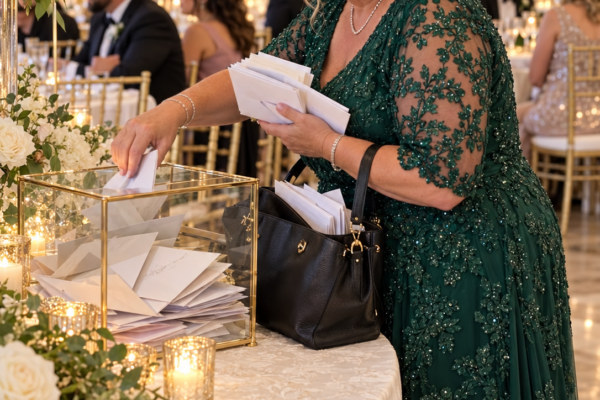
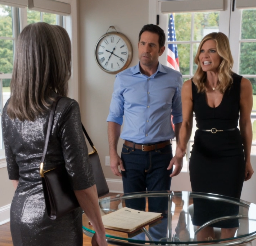
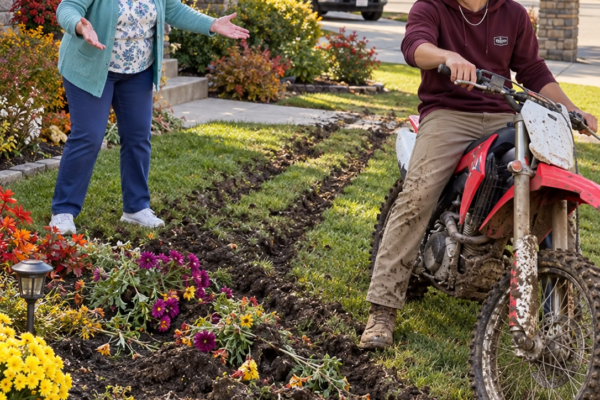
My parents told every employer in town that I was a thief; I couldn’t get hired for 2 years; Dad said, “Maybe now you’ll learn to respect us”; last week, I finally got a job interview; the CEO walked in, looked at me, and said, “Before we start, I need to give you this, your grandmother left it with strict instructions”; he handed me a sealed envelope dated 15 years ago.
I am Bennett. I am 27 years old, and for the last two years, my own parents systematically destroyed my life to save their reputation.
Before I tell you about the sealed envelope that changed everything, let me know where you’re watching from in the comments. I love seeing how far these stories travel.
It was a Tuesday morning that felt heavy before it even started. I was standing outside Fenwick’s Hardware, staring at a crooked “General Labor Needed” sign taped to the glass.
My bank account had $42 in it. Rent was due in three days. I hadn’t eaten real meat in a month.
Then I saw Warren, the owner, look up at me through the glass. His face didn’t show rejection. It showed disgust.
He ripped the sign down, crumpled it in his fist, and turned his back.
It wasn’t the first time. It was the 50th.
Walking away, I passed Mrs. Redmond and her sister from church. The conversation died the second they saw me.
“That’s him,” one whispered.
“Lenora said he stole her whole retirement stash. And they say he’s on drugs.”
I’d never touched a drug in my life.
It didn’t matter.
In this town, the truth belonged to whoever told the story loudest. And the storytellers were my parents, Conrad and Lenora, pillars of the community, church elders, the nicest house on Elm Street.
I walked three miles home because my car had been repossessed six months earlier, to a basement apartment that smelled like bleach and damp earth.
Dinner was a dry packet of instant noodles, crushed and eaten straight from the wrapper to save on water.
The only thing of value I owned sat on a milk crate: my grandma be’s old Timex, leather strap falling apart.
She was the one person in that family who never looked at me like a disappointment.
“Keep your time, Benny,” she used to say. “People can steal your money. They can steal your joy. But don’t let them steal your time.”
“I’m trying, Grandma,” I whispered to the empty room. “But I’m running out of time.”
Then my burner phone rang.
A woman named Mallalerie, calling from Logistics Solutions, a real distribution company, the one place I’d applied to that had no connection to my parents’ social circle.
They wanted me for a project manager position.
Interview tomorrow, 9:00 a.m.
“Oh, and Bennett,” she added before hanging up. “The CEO asked to sit in on this one personally. Don’t be late.”
The CEO for a mid-level hire.
My paranoia spiked immediately.
Was this another setup? Another way for my father to humiliate me through a friend in high places?
But I had $42 and dry noodles.
I had nothing left to lose.
To understand why that phone call terrified me, you need to understand what happened two years earlier.
My parents were obsessed with image.
My father, a successful consultant. My mother, head of the charity league. And my older brother, Preston, star quarterback, class president, golden child, running for town council in his bright yellow Porsche.
I was just the spare.
Good grades, quiet, unremarkable.
Preston was the story.
I was the footnote.
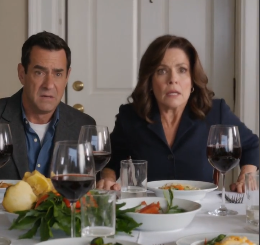
One rainy Sunday, I came home to find my mother sobbing, my father pacing, and Preston sitting with his head in his hands.
Preston had a gambling problem.
He was $40,000 in debt to dangerous people, behind on the Porsche. And worse, he’d cracked the safe in my parents’ study and stolen their entire $50,000 retirement stash to chase a losing bet.
“I can fix this,” Preston begged. “If this gets out, my campaign is over.”
My father looked at Preston.
Then he looked at me.
I watched him do the math.
“We need you to take the fall,” Preston said. “Just say you took it for a drug debt. Whatever. It’ll just be a family matter.”
“You want me to say I’m a thief to save him?”
“He’s your brother,” my mother cried. “Where’s your loyalty?”
I refused.
My father’s voice went cold.
“I wasn’t asking, Bennett. You’ll take the blame, or I’ll tell this whole town you’re a thief anyway. That you have a gambling problem. That you’re unstable.”
I walked out.
I slammed the door so hard the windows rattled, certain he was bluffing.
He wasn’t.
By morning, my boss at the surveying firm had already gotten a call from my father.
I was fired before lunch.
Integrity issues.
My father, co-signer on my car loan, told the bank he wouldn’t help me anymore.
Within months, the car was repossessed.
The rumors spread like wildfire.
The ungrateful son who robbed his elderly parents to buy drugs.
Preston played the grieving, supportive brother to perfection.
He won his election.
He kept the Porsche.
I lost everything.
I sold my furniture, my laptop, my equipment, and moved into a basement unit with black mold and a landlord who took cash and asked no questions.
I remember Preston pulling up beside me once in that yellow Porsche, looking me over in my torn jeans.
“It’s not stealing if it stays in the family,” he said, flicking a $20 bill into an oil puddle at my feet. “Buy yourself a haircut. You’re embarrassing us.”
I picked the wet bill out of the grease and hated myself for needing it.
The lowest point came at the supermarket, where the manager, a guy I’d played Little League with, marched two security guards down the aisle, called me a thief in front of a mother and her toddler, and had them turn my pockets out in public.
They found nothing but lint.
I walked out anyway, banned for trespassing.
That night, packing a trash bag to leave town for good, I found the watch again and remembered something Grandma Be had whispered to me in the hospital before she died.
“There’s a box, Bennett. A safety deposit box. Not the one your mother has the key to. The other one. The one the lawyer knows.”
I dismissed it as the morphine talking.
I had no lawyer, no money, no way to check.
That’s when the phone rang with the job offer.
The next morning, I ironed my one shirt with a heavy book, colored in the scuffs on my shoes with marker, and rode the bus to the glass-and-steel headquarters of Logistics Solutions.
Gideon Sinclair, the CEO, a self-made man who’d built the company from one truck 20 years earlier, was waiting in his office.
He didn’t smile.
He just studied my face for a long, uncomfortable moment.
“You look like her,” he finally said. “Around the eyes. You have Beatatric’s eyes.”
My grandmother’s name stopped my breath cold.
“This company wouldn’t exist without Beatatrice,” Gideon said. “She was one of my first investors. $10,000, back when nobody would lend me a dime. She kept it silent. Said, ‘Your father would just try to control it.'”
He walked to a wall safe, spun the dial, and pulled out a thick manila envelope, its wax seal unbroken.
Written across the front in my grandmother’s shaky cursive:
“For Bennett. To be opened when the wolves are at the door.”
“She started bringing me records 15 years ago,” Gideon said. “She saw what your parents were becoming. She told me, ‘One day they’ll try to break my Bennett. When that day comes, and if I’m not here, you give him what I’ve prepared. Not before.'”
I broke the seal.
Inside were a letter, a leatherbound diary, and an old cassette tape.
My grandmother’s letter explained everything.
That she’d watched my parents mold Preston and neglect me for years.
That she’d kept a written record of every lie and every cover-up.
And that because words on paper could be denied, she’d left something that couldn’t be.
I played the tape.
My father’s voice, 10 years younger, filled the room, planning to frame me for a cheating scandal in high school so Preston could get into the college he wanted.
Another recording.
My parents’ kitchen.
My mother sobbing.
My father deciding to drain my college fund to pay off one of Preston’s drunk-driving bribes.
“He’s trusting,” my father said. “He’s stupid like that. He won’t know the difference.”
There was nearly an hour of it.
Years of quiet, deliberate sabotage, all lawfully recorded and pointing toward bank, insurance, and school records that independently confirmed everything.
Then came the last document.
An irrevocable trust.
15 years earlier, my grandmother had placed 51% of Logistics Solutions shares, now worth roughly $4 million, into a trust that would only activate if I ever proved I’d cut ties with my abusive family instead of caving to them.
If I’d stayed and endured it, the shares would have gone to charity.
By walking out that door two years ago, I’d already unlocked it.
“You’re not a thief, Bennett,” Gideon said. “You’re a majority shareholder in the company your father’s been chasing a consulting contract with for five years. So, what do you want to do with this?”
I stood up, buttoned my jacket, and said the only thing that felt true.
“I want to hire a lawyer. The best one money can buy.”
We spent three days authenticating the diary and digitizing the tapes with Gideon’s attorney, a sharp, expensive man named Wexford, who called it exactly what it was:
Fraud, embezzlement, extortion, all backed by independently verifiable records.
We sent cease-and-desist letters to every employer in town who’d rejected me.
Each one attached to a sworn affidavit from Gideon himself, vouching for my character and hinting at a defamation suit if the rumors didn’t stop.
Then the process server came.
The $10 million lawsuit for defamation, lost wages, and emotional distress landed on my father’s doorstep at 7 in the morning, with the college fund recording attached as evidence.
The same week, the dealership’s repossession order finally caught up to Preston’s Porsche.
Towed away in front of cameras at a ribbon-cutting ceremony while he was mid-handshake.
My phone rang.
My father.
My mother.
Then Preston.
I let every call go to voicemail, calm for the first time in two years.
Read, the only friend who’d never believed the rumors, texted me a video of the tow truck.
I smiled.
A real one.
Discovery tore the rest of it open.
My father had leveraged the house to cover Preston’s gambling debts far beyond what I’d known.
My mother had been quietly skimming from her own charity league when it hit the local paper.
Not rumor this time, but court-verified fact.
The town turned.
The country club revoked their membership.
The church asked my father to step down as an elder.
Preston’s political career didn’t just end.
It burned publicly as the recordings of his own admissions circulated.
He resigned from the town council and withdrew from re-election in disgrace.
I didn’t gloat.
I went to work.
I rebuilt the college fund they’d stolen, dollar by dollar, and turned a failing distribution project profitable in 90 days.
Not for applause, but because for once, hard work actually earned something instead of more criticism.
Then Preston called, his arrogance gone, his voice hollow.
“Mom and Dad, they’re not doing well. Please. 10 minutes at the diner.”
I agreed to 15.
They looked like different people.
My father, gray-skinned and unshaven.
My mother, clutching her purse like a life raft.
Preston in a faded polo, dark circles under his eyes.
I didn’t sit.
“We need a loan,” my father finally admitted. “Just to cover the mortgage. We know about the trust. We’ll pay you back with interest.”
I reached into my pocket and set a crisp $20 bill on the table in front of Preston.
“Remember the gas station? You flicked one of these into an oil puddle and told me to buy a haircut. I picked it out of the dirt and bought bread with it.”
I slid it toward him.
“This one’s for your dinner. That’s all you’ll ever get from me again. No loan, no reduced settlement, no inheritance.”
My father stood, shaking.
“I gave you life, and you’re taking it away.”
“Now I’m taking it back,” I said, and walked out without looking behind me.
I drove to the cemetery on the hill, to my grandmother’s plain gray headstone under the oak tree, and knelt in the grass without caring about my suit.
“I did it,” I told her. “I didn’t let them win.”
I set the empty envelope on her grave, waited down with a riverstone.
“How did you know?” I asked the wind.
And somewhere in the rustling leaves, I could almost hear her answer.
“Because people show you who they are, Benny. You just have to be brave enough to believe them.”
For years, I thought inheritance meant money, the house, the cars, the status my family worshiped and Preston destroyed himself chasing.
What my grandmother actually left me was the truth, the means to defend my own dignity, and the lesson that family isn’t about blood.
It’s about who would bleed for you.
The next morning, I walked into the Loshious Solutions boardroom, laptop in hand, my grandmother’s old Timex still ticking on my wrist.
I could have bought 10 Rolexes by then.
I kept the Timex.
“Good morning,” I said to the room. “My name is Bennett, and I have a plan for the future.”
My father was wrong about respect.
He thought it meant fear, submission.
Standing there, rebuilding a life from nothing but grit and a grandmother who saw my worth when no one else would, I finally understood what real respect was.
The kind you learn to have for yourself.
And once you have that, nobody can ever take it away again.
My parents are living in a small apartment two towns over.
Now they filed for bankruptcy last month.
They don’t call anymore.
Preston is doing construction work, sweating for a paycheck for the first time in his life.
Maybe it changes him.
Maybe not.
That’s not mine to carry anymore.
I have a company to help run and a foundation to build, a scholarship fund for kids who get thrown away by their own families, so they get a cleaner start than I did.
Have you ever had to cut ties with family to save yourself?
Or had a grandma be who believed in you when no one else did?
Tell me in the comments.
Or if you believe self-respect is the ultimate inheritance, just type good below.
If you came here from Facebook because of this story, go back to the original Facebook post, tap Like, and leave exactly this short comment: “Respect.” That small action means more than it may seem. It directly supports the storyteller and gives me more motivation to keep sharing stories like this with the same care, time, and effort.