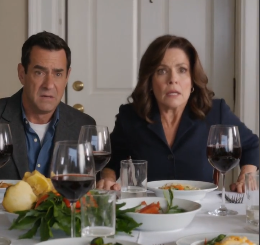
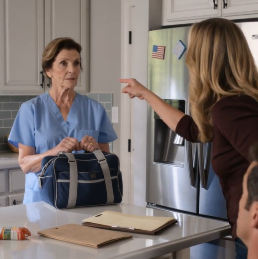
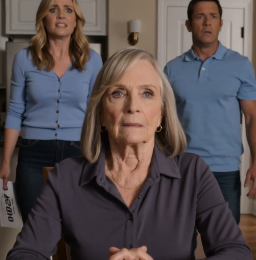
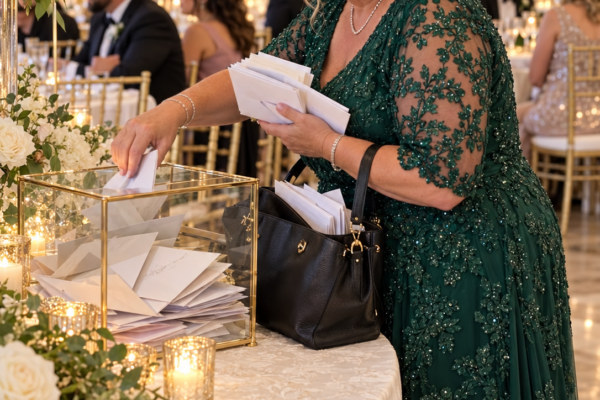
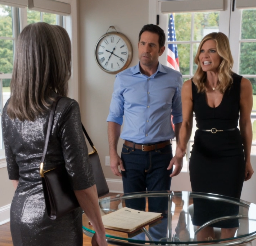
When I returned from a business trip, the doorman stopped me from entering the building: he handed me a note from my granddaughter saying: “You are no longer part of the family”; my granddaughter kicked me out.
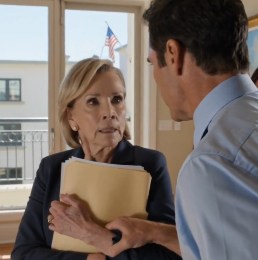
My hand trembled as I read those words again. I looked up at Rodrigo, our building’s doorman for the past 15 years, searching his face for some explanation, some hint. That this was all a terrible mistake.
Ms. Nomi, I’m so sorry, he said, his voice low, eyes avoiding mine. Rosanna asked me to give this to you when you returned. I clutched my suitcase handled tighter, feeling suddenly unsteady on my feet.
After 30 years in this building, after raising my granddaughter in this very home since she was 7 years old, I was being turned away like a stranger. Did she say anything else? My voice sounded strange, distant, as if it belonged to someone else.
Rodrigo shook his head, his discomfort obvious. She just left this note yesterday and said you would understand. But I didn’t understand.
Just two weeks ago, before my trip to Chicago for the annual business conference, everything had seemed fine. Rosanna had even helped me pack, sitting on my bed like she used to as a little girl, suggesting which outfits I should take. “Is she upstairs now?” I asked, my throat tightening.
“No, ma’am. I haven’t seen her today.” I nodded, trying to maintain my composure. At 67, I’dathered many storms.
My husband’s early death, my daughter’s fatal car accident that left little Rosanna motherless, building a business from scratch while raising a grieving child. But this this blindsided me completely. I’ll just go up then, I said, reaching for my keys.
Rodrigo shifted uncomfortably. Ms. Nomi, I think. I think the locks have been changed.
The lobby suddenly felt too bright, too exposed. I could feel curious eyes from the mail area watching this scene unfold. Mrs. Nomi Fisher, always so put together, now standing frozen, locked out of her own home.
I see, was all I could manage. Memories flooded unbidden. Rosanna at 8, still having nightmares about the accident, crawling into my bed.
At 12, winning the science fair with my guidance. At 16, rolling her eyes at my outdated advice, but still seeking it. At 22, moving back home after college because it just made sense financially, Gran.
When had things changed? When had my sweet girl turned into someone who could write those cold words, “You are no longer part of the family.” “Is there someone I can call for you?” Rodrigo asked gently. I shook my head.
Who would I call? My friends were mostly business associates. My sister lived across the country, and the only real family I had was Rosanna.
I’ll get a hotel room, I said, straightening my shoulders. Could you call me a taxi, please? As I waited on the sidewalk, I scrolled through my phone, looking at recent messages from Rosanna.
Nothing seemed to miss. The last text was 4 days. Ago, have a great final day at the conference.
Gran safe travels home. The taxi pulled up and I slid inside, giving the driver directions to a nearby hotel. As we pulled away, I glanced up at the 12th floor, my floor, and thought I saw a figure at the window.
Was it Rosanna? Or perhaps her boyfriend, Thomas, whom I’d never quite trusted? The hotel room was impersonal, but clean.
I sat on the edge of the bed, still in my travel clothes, and tried calling Rosanna straight to voicemail. I texted, “I’m back in town. Got your note.
We need to talk, please.” No response. Finally, at nearly midnight, my phone buzzed. A text from Rosanna.
There’s nothing to discuss. The locks have been changed. Your things are being packed.
You can arrange to collect them next week. My things being packed as if 30 years of life could be so easily boxed and dismissed. I called immediately to my surprise.
She answered, “Rosanna, what’s happening? Why are you doing this?” Her voice was so cold, so unlike her. You know why, Gran?
Or should I even call you that? You’re not really my grandmother, are you? Just my mother’s stepmother.
We’re not even blood. The words hit me like physical blows. It was true that I’d married her grandfather when her mother was already 10, but I’d raised her mother as my own.
And when tragedy struck, I’d done the same for Rosanna. Blood doesn’t make a family, Rosanna. Love does, care does, 30 years does.
Save it. She cut in. I know the truth now about everything.
Thomas helped me see clearly. Thomas, of course. What truth?
Rosanna, talk to me. Check the front desk tomorrow. I’ll leave a box with your essential items.
The line went dead. I sat there, phone still pressed to my ear, listening to nothing. Sleep wouldn’t come.
Around 3:00 a.m., I slipped out to the hotel’s deserted lobby and asked the night clerk for a piece of paper. I wrote down everything I could remember about the past few months, searching for clues for any sign of what had triggered this. By dawn, I’d filled several pages, but was no closer to understanding.
The only constant was Thomas appearing in Rosanna’s life 6 months ago. Thomas, who always asked such detailed questions about my business, my investments, my property. I returned to my building at 9:00 a.m. hoping to catch Rodrigo alone.
He looked relieved to see me. Ms. Nomi, I’m so sorry about yesterday. It’s not your fault, Rodrigo, but I need to ask.
Did you notice anything strange recently? People coming and going from my apartment. He hesitated, then nodded.
Movers. Yesterday and the day before, big trucks. My blood ran cold.
Movers taking what? Everything. I think furniture, paintings, boxes, everything.
They had taken everything. I stood in the doorway of what had once been my home, staring at empty spaces where my life had been. The antique dining table where Rosanna had done her homework.
The blue velvet sofa where we’d watched movies together. The curio cabinet filled with treasures collected over decades. All gone.
Rodrigo had managed to get me access with the building’s master key against protocol. Just 15 minutes, he’d whispered, looking nervously over his shoulder. Before they come back, I moved through the barren rooms like a ghost.
The walls stripped of photographs and paintings were marked with pale rectangles where memories had once hung. In the kitchen, even the copper pots that had belonged to my mother were gone. My bedroom was the worst.
The mattress remained, but my dresser, vanity, and armoire had vanished. With them, generations of jewelry, including my wedding ring and the pearl necklace I’d planned to give Rosanna on her 30th birthday. I sank to the floor, unable to process the magnitude of what had happened.
This wasn’t just theft. It was Rajger. My phone buzzed. A text from an unknown number. You shouldn’t be there.
Leave now or we’ll call the police. Thomas, it had to be. I ignored it, pushing myself up and forcing my legs to carry me to Rosanna’s room.
Unlike the rest of the apartment, her room was untouched, exactly as it had always been. Her childhood stuffed animals still lined the window seat. The photo collage of her college years still hung above her desk.
That’s when I spotted it. A manila folder lying on her bed. Inside were documents I’d never seen before.
A deed transfer for my apartment appearing to show my signature. Giving ownership to Rosanna. Bank statements showing large withdrawals I’d never made.
A power of attorney document I’d supposedly signed giving Rosanna control over my assets. My signature was on everything except it wasn’t my signature. Close, but not quite right.
I see. You found them? I whirled around.
Rosanna stood in the doorway, Thomas just behind her. He was tall, handsome in that calculated way that had always made me uneasy. His hand rested possessively on Rosanna’s shoulder.
What have you done? My voice was barely a whisper. Rosanna stepped forward.
She looked different somehow, harder, older than her 27 years. Nothing that wasn’t already coming to me. By forging my signature, by stealing everything I own.
Thomas laughed softly. Stealing is such an ugly word. We prefer accelerated inheritance.
I looked at Rosanna, searching for any sign of the girl I’d raised. Why? I would have given you anything you asked for.
I was already planning to leave everything to you. Something flickered across her face. Doubt?
Regret? But Thomas squeezed her shoulder and it vanished. “We didn’t want to wait,” she said flatly.
“You’ve lived your life already. Now it’s our turn.” “Your turn,” I repeated, the words hollow in my chest. And what about me?
Where am I supposed to go? Thomas shrugged. You’re resourceful.
You’ve always been good at landing on your feet. The casual cruelty of it stunned me. Rosanna, I said, ignoring him.
Think about what you’re doing. This isn’t you. You don’t know me, she snapped.
You never did. You were always too busy with your precious business, trying to prove something to people who didn’t even care. She gestured at the empty apartment.
All this stuff you collected. What was it for? Just to show everyone how successful you were.
The sat. Accusations stung because there was a grain of truth in it. After my husband died, I had thrown myself into work building a consulting business that eventually thrived.
Had I neglected Rosanna? Had I been too focused on providing financially rather than emotionally? But no.
This revision of our history didn’t match the reality I remembered. The school events I’d rearranged meetings to attend, the vacations we’d taken, the late night talks about her hopes and dreams. I made mistakes, I admitted, but nothing that justifies this.
Thomas checked his watch impatiently. We don’t have time for this. The movers will be back in an hour for the rest.
I stood straighter, finding a core of strength I didn’t know I still possessed. I’m calling the police. Thomas smiled.
The kind of smile that never reaches the eyes. With what evidence? Your signature is on everything.
The apartment is legally Rosanna’s now. The furniture. She can claim it was always hers or that you gave it to her.
It’s your word against ours. And who do you think they’ll believe? Rosanna added.
A confused old woman or the granddaughter who’s been caring for her? Caring for me? The absurdity of it might have made me laugh if the situation weren’t so devastating.
You need to leave, Thomas said, stepping forward menacingly. I looked at Rosanna one last time. Is this really what you want?
She wouldn’t meet my eyes. Just go, Gran. I gathered the folder of forged documents, clutching it to my chest.
I’ll go, but this isn’t over. As I walked past them, Thomas grabbed my arm, his fingers digging painfully into my flesh. Leave the folder.
No. I met his gaze steadily. You take my home, my possessions, even my granddaughter.
But not this. This I keep. For a moment, I thought he might force it from me, but Rosanna placed a hand on his arm.
Let her go. It doesn’t matter now. In the elevator, I leaned against the wall, suddenly aware of how fast my heart was racing.
The reality of my situation crashed over me in waves. I was homeless. Most of my possessions were gone.
The child I’d raised had betrayed me in the most fundamental way. Rodrigo was waiting anxiously in the lobby. Ms. Nomi, are you all right?
I wasn’t all right. I would never be all right again. But I managed to nod.
Where will you go? He asked. It was the question I’d been avoiding.
My bank accounts were likely compromised if they had gone this far. My business contacts were out of town. Friends. I’d let most of those relationships fade over the years, prioritizing work and Rosanna.
I don’t know, I admitted. Rodrigo hesitated, then said, “My sister has a small apartment she rents out. It’s nothing fancy, not like what you’re used to, but it’s clean and in a decent neighborhood.” I stared at him.
This man who’d watched me come and go for 15 years, who knew me only as a nodded greeting, a Christmas tip, a brief chat about the weather. Yet here he was offering help when those closest to me had turned away. Thank you, I said, my voice breaking.
I would appreciate that very much. As I followed him outside to call his sister, I felt something shift inside me. The numbness of shock was giving way to something else.
Not just grief or betrayal, but a slow burning resolve. They thought they had taken everything from me. But they were wrong.
I still had my mind, my determination, and now an unexpected ally. They had underestimated me. It wouldn’t be the last.
Rodrigo’s sister’s apartment was on the third floor of a modest building in a neighborhood I’d rarely visited. The space was tiny. A kitchenet, living area, bathroom, and bedroom all crammed into less than 600 square ft. The furniture was mismatched.
The carpet worn thin in places, but it was clean, and right now it was all I had. “It’s just temporary,” Maria Rodrigo’s sister assured me as she handed over the keys. Until you figure things out. Figure things out as if what had happened to me was a simple problem to solve, like a business challenge or a difficult client.
This was my life shattered into unrecognizable pieces. Thank you, I said, attempting a smile. I appreciate your kindness.
After she left, I sat on the edge of the sagging twin bed and finally allowed myself to break down. The sobs came from somewhere deep and primal, tears burning hot tracks down my cheeks. I cried until my throat was raw and my eyes swollen.
Until there was nothing left but hollow exhaustion. For 3 days, I barely moved from that bed. I didn’t answer my phone.
I didn’t eat. I simply stared at the water stain on the ceiling, replaying every moment with Rosanna, searching for signs I’d missed, warnings I’d ignored. Had she always been capable of such betrayal?
Had Thomas simply revealed her true nature, or had he somehow twisted her into someone unrecognizable? The Rosanna I knew, or thought I knew, had been kind, ambitious, sometimes self-centered like many young people, but never cruel, never calculating. The fourth day, a knock at the door pulled me from my stuper.
I considered ignoring it, but the knocking persisted, growing more insistent. Know me? It’s Judith from 10B.
Rodrigo told me where to find you. Judith Miller, my neighbor from two floors below. We weren’t close friends, but we’d shared elevators and small talk for years.
I’d helped her carry groceries once when her arthritis was flaring. She’d watered my plants during a vacation. I opened the door, suddenly self-conscious about my unwashed hair, my wrinkled clothes.
Oh, honey. Her face softened with concern. Look at you.
Before I could respond, she bustled past me into the apartment, arms loaded with grocery bags. “You need to eat,” she declared, heading straight for the kitchenet. “And shower.
No offense, but you look terrible.” Her bluntness was oddly comforting. “No pity, just practical concern.” “I’m fine,” I said automatically. Judith snorted, pulling items from her bags.
You’re as far from fine as I’ve ever seen anyone, and I’ve been around for 72 years. She handed me a bottle of water. Drink this, then shower.
I’m making soup. Too exhausted to argue, I complied. The hot water helped clear my head, and by the time I emerged, dressed in clean clothes from my suitcase, the apartment smelled of chicken soup and fresh bread.
Sit, Judith commanded, ladelling soup into a chipped bowl. Eat, I did, surprised to find I was ravenous. We ate in silence until my bowl was empty.
Judith refilled it without asking. Rodrigo told me what happened, she said finally. Some of it, anyway.
I stared into my soup. My granddaughter stole everything from me. My home, my possessions, my dignity. Saying it aloud made it even more surreal.
Judith nodded. My son did something similar to me 5 years ago. My head snapped up.
What? Not as dramatic as your situation, she clarified. But he convinced me I was becoming unsafe living alone. Said I should sign over my condo to him for estate planning purposes.
Next thing I knew, he’d moved me into an assisted living facility that was little more than a glorified storage unit for old people. Took my car, my jewelry, my freedom. “What did you do?” I asked, suddenly hungry for her answer.
“Fought back,” she said simply. “Found a lawyer who specializes in elder abuse. Got my condo back.
Haven’t spoken to my son since. Elder abuse, I repeated, the words bitter on my tongue. Is that what this is?
What would you call it? Judith asked, not unkindly. I’d never thought of myself as an elder despite my 67 years.
In my mind, I was still the woman who’d built a business from scratch, who’d raised a child while juggling clients and deadlines. Someone others relied on, not someone vulnerable to exploitation. “I don’t know what to do,” I admitted. “Where to even start?” “You start by not letting them destroy you,” Judith said firmly.
“That’s what they want, you know, for you to give up, to disappear quietly.” Her words struck a chord. “Wasn’t that exactly what I’d been doing these past few days? Hiding?
Giving up? I need to check my accounts, I said suddenly, reaching for my phone. See what else they’ve taken.
That’s the spirit, Judith nodded approvingly. And while you do that, I have something else to show you. She pulled out her tablet and opened a browser.
Look what your granddaughter has been up to. The screen showed a listing on an upscale online marketplace. My breath caught.
It was my mother’s antique silver tea service passed down through three generations. The listing title read, “Vintage sterling silver tea set, family heirloom.” “She’s selling my things,” I whispered, scrolling through more listings. “My rare first edition books, the Persian rug from my living room, even my clothes, designer pieces I’d collected over decades.
Not for long, Judith said grimly. I’ve been taking screenshots evidence. For the first time since reading that devastating note, I felt something other than despair.
A spark of fury, small but fierce, ignited in my chest. I need my laptop, I said standing abruptly. And my phone charger and paper.
I need to make lists. Judith smiled. Now, that sounds like a woman with a plan.
Not a plan. Not yet. I took a deep breath, but I’m not going to disappear.
I’m not going to make this easy for them. As I charged my phone, I scrolled through missed calls and messages. Most were from unfamiliar numbers, creditors likely, looking for payments on accounts Rosanna had opened in my name.
But one name stood out. Margaret Chen, my attorney. I played her voicemail.
Nomi, I’ve received some concerning paperwork supposedly authorized by you. Please call me as soon as possible. Relief washed over me.
Margaret had noticed something wasn’t right. I wasn’t completely alone in this. I’ll call her tomorrow, I told Judith.
First thing, she nodded, gathering her things to leave. At the door, she turned back. Remember, Nomi, you’re not the first person this has happened to, and you’re stronger than you think.
After she left, I stood in the center of the tiny apartment, surveying my new reality. A borrowed space, a suitcase of clothes, a folder of forged documents. It wasn’t much, but it was a starting point.
And for now, that would have to be enough. Elder fraud is one of the most underreported crimes, Margaret Chen said, her voice calm, but her eyes sharp behind stylish glasses. Many victims feel too embarrassed to come forward, especially when family is involved.
We sat in her office, the downtown skyline visible through large windows. I’d worked with Margaret for 15 years since I’d first expanded my business. She’d handled my contracts, my taxes, my will.
The will that had explicitly left everything to Rosanna. I’m not embarrassed, I said. I’m furious.
Margaret nodded, spreading the forged documents on her desk. As you should be. These are sophisticated forgeries, but they wouldn’t hold up under expert scrutiny.
She tapped a power of attorney form. For one, I know you’d never sign something like this without consulting me first so I can get everything back. My apartment, my possessions.
Her expression turned cautious. It’s complicated. We could file for an emergency injunction to prevent further sale of assets.
We’d need to involve the police for the forgery charges, but these cases can drag on for months, even years. I don’t have years, I said quietly. I don’t even have months.
I’m living in a borrowed apartment with nothing but a suitcase. I understand. She leaned forward.
But I want you to be realistic about the process. Even with clear evidence of fraud, the courts move slowly. She hesitated.
And there’s the matter of your relationship with Rosanna to consider. What relationship? I asked bitterly.
She’s made it clear where we stand. Still, she’s your granddaughter. Are you prepared for what this means?
Potential criminal charges against her, a permanent rupture. I stared out the window, considering. Despite everything, some small part of me still clung to the Rosanna I’d raised. The little girl who’d cried in my arms after nightmares.
The teenager who’d helped me learn social media. The young woman who’d graduated college with honors, making me burst with pride. But that Rosanna was gone.
Perhaps she had never really existed. I need to be practical, I finally said. I need a place to live, money to survive on.
If pursuing legal action will take too long, what are my options? Margaret thought for a moment. There might be another approach.
You mentioned several valuable antiques and collectibles in the apartment. I nodded. Family heirlooms mostly, some quite valuable.
And you have documentation for these items. Insurance records, appraisals, photographs proving they belong to you? Yes, in my safe deposit box.
They haven’t gotten to that yet, as far as I know. She smiled slightly. Good.
Here’s what we can do. Instead of fighting to reclaim everything immediately, we build a targeted case around specific items with clear documentation of ownership. Items too distinctive to be easily disposed of.
And then what? We negotiate. Offer to drop potential criminal charges in exchange for a settlement.
I frowned. You want me to let them get away with this? No, Margaret said firmly.
I want you to get back on your feet as quickly as possible. Sometimes the best revenge is living well. I wasn’t sure I agreed, but I had to admit her approach was practical.
We spent the next hour outlining a strategy. Margaret would file initial paperwork and contact Rosanna officially while I would focus on rebuilding my financial foundation. As I left her office, my phone buzzed with a text from Judith.
Need anything from the store? Coming your way. My throat tightened.
A week ago, I wouldn’t have called Judith a friend. Now she was a lifeline. Just company.
I texted back. Within the hour, we were sitting at my tiny kitchen table making lists. I’d accessed my bank accounts that morning confirming my fears.
Most of my accessible funds had been drained, though they hadn’t yet reached my retirement accounts or business holdings. First priority is income, I said thinking aloud. I need to contact my clients.
Explain I’m facing personal challenges. What exactly is your business? Judith asked.
Management consulting. I specialize in helping companies streamline operations and improve efficiency. I smiled.
Riley. Ironic considering the state of my personal life right now. Could you work from here? she asked, glancing around the tiny apartment.
I considered it for consultations. Yes, the rest could be done remotely. I’d need a proper desk setup, though.
Judith nodded decisively. My nephew works at that office supply warehouse. He can get us a discount on a desk and chair.
Us? Figure of speech? She said, waving dismissively.
Point is, we’ll get you set up. By the end of the day, I’d outlined a plan. Contact key clients, set up a temporary office, establish new bank accounts, secure my remaining assets.
Small, manageable steps. That night, exhaustion finally caught up with me. I fell into a deep, dreamless sleep for the first time since returning to find my life upended.
The next morning, I woke to an email from Margaret. Preliminary notice sent to R. Expect push back.
Stand firm. I barely had time to process this before. My phone rang.
Rosanna’s number. My hand hovered over the screen. Don’t answer, Judith advised from the kitchenet where she was making coffee.
She’d stayed over, claiming the sofa was more comfortable than her bed at home. I suspected she was keeping an eye on me. I need to know what she’s saying, I countered and accepted the call, putting it on speaker.
Gran Rosanna’s voice, hesitant, almost fragile, so different from her cold dismissal days ago. Yes, I said, keeping my tone neutral. I just got this crazy letter from your lawyer.
Some nonsense about fraud and stolen property. She gave a little laugh as if this were all a misunderstanding. What’s going on?
The audacity nearly took my breath away. I think you know exactly what’s going on, Rosanna. Is this about the apartment?
Look, I know we moved quickly, but you always said it would be mine someday. We just made it official a little sooner by forging my signature, by emptying my bank accounts, by selling my possessions online. My voice remained steady, though my hands shook a pause.
Then her tone hardened. Thomas says, “We don’t need to have this conversation. Our lawyers will handle it.” “Is that what Thomas says?” I asked, a sudden clarity washing over me.
“And what do you say, Rosanna? Is this really who you want to be?” “Don’t try to manipulate me,” she snapped. You’re just upset because for once I’m putting myself first.
Is that what you think this is? Standing on your own. You’ve stolen from me, Rosanna.
You’ve broken the law. That’s not independence. That’s crime.
Another pause. Longer this time. We have documentation for everything, she finally said.
But there was a note of uncertainty in her voice. Forge documentation. Do you really want to test that in court?
She didn’t answer immediately. In the background, I could hear Thomas’s voice, though not his words. Then, Rosanna muffled.
I’m handling it. Gran, she said back on the line, her voice professionally pleasant now. I think we both want to avoid unnecessary ugliness.
Why don’t we meet and discuss this reasonably? I met Judith’s gaze across the room. She shook her head in warning.
“Any discussion will need to happen with our attorneys present,” I said firmly. “Fine,” Rosanna said after a moment. “Have your lawyer contact hours.” After she hung up, I sat staring at the phone.
“She’s scared,” Judith observed, bringing me coffee. “Maybe,” I said. “Or just recalculating.” Later that day, while setting up my new laptop on a card table that would serve as my temporary desk, I received a text from an unknown number.
This is Thomas. You’re making a mistake. Back off now, or we’ll make sure everyone knows about your memory problems.
Who do you think people will believe? A confused old woman or her concerned granddaughter? Think carefully.
I showed the message to Judith, who had appointed herself my unofficial assistant, organizing receipts and helping me catalog what had been taken. “Charmming fellow,” she remarked. “You’re keeping that message, I assume.” “Oh, absolutely,” I said, forwarding it to Margaret.
“Every threat just makes our case stronger. For the first time, I felt a flicker of something like hope. I might have lost my home, but I hadn’t lost my mind.
I hadn’t lost my fight. And now I had a plan. The cafe was my choice.
Neutral ground, public, halfway between my temporary apartment and what had once been my home. I arrived 20 minutes early, settled at a corner table with clear sight lines to both entrances, and ordered tea I didn’t touch. Margaret sat beside me, elegant in a charcoal suit, documents neatly arranged in a leather portfolio.
“Remember,” she said quietly. “We’re not here to negotiate everything, just the items with ironclad proof of ownership.” I nodded, my eyes fixed on the door. A week had passed since Rosanna’s call, filled with careful preparation.
I’d secured my remaining assets, contacted my most important clients, and even managed a small consulting job via video call. The routine had been therapeutic, a reminder that while much had been taken from me, my mind and skills remained intact. “There they are,” Margaret murmured.
Rosanna entered first, scanning the cafe until she spotted me. She wore a cream colored dress I’d bought her for her college graduation. Her hair pulled back severely.
Thomas followed in an expensive suit that seemed at odds with his perpetually smug expression. Behind them trailed a man in his 50s, carrying a briefcase. Their attorney presumably.
As they approached, I studied my granddaughter’s face, searching for something. Remorse, shame, even anger. Instead, I found only a careful blankness, a mask I’d never seen her wear before.
“Gran,” she said, her voice professionally cordial as they reached our table. “No kiss on the cheek, no real acknowledgement of our relationship, just a business meeting between adversaries.” “Rosanna,” I replied, equally formal. Introductions were made.
Their lawyer was Alan Peterson, a divorce attorney who seemed slightly uncomfortable with the proceedings. Interesting choice, I thought. Not a fraud specialist or criminal defense attorney, but someone accustomed to dividing assets.
Let’s get straight to business, Thomas said impatiently. We’ve reviewed your claims, he made the word sound ludicrous. We’re prepared to offer a settlement.
Margaret raised an eyebrow. I don’t believe we’ve presented our demands yet. We’re being proactive, Peterson interjected smoothly.
Ms. Fischer has certain items she feels emotionally attached to. We’re willing to return some of them as a gesture of goodwill. Some of them, I repeated, my own possessions.
Rosanna shifted in her seat. The apartment was in the process of being transferred to me anyway. You said so yourself many times.
The process, I emphasized, meeting her gaze directly. With proper legal documentation, not through forged signatures, Thomas leaned forward. Allegedly forged.
Your memory hasn’t been the best lately. Has it know me? Margaret placed a restraining hand on my arm, then slid a document across the table.
We’ve prepared a comprehensive list of items with undisputed proof of ownership, bank records, insurance documentation, provenence certificates, photographs with timestamps spanning decades. Peterson reviewed the list, his expression growing increasingly concerned. He leaned over to whisper something to Rosanna, whose mask finally slipped, revealing a flash of worry.
We’ve also documented the online sales of several of these items, Margaret continued, passing over printouts of the listings Judith had been tracking. The pearl necklace that belonged to Mrs. Fischers. Mother, the first edition Hemingway, the Persian rug appraised at $22,000.
Thomas scoffed. Rosanna’s grandmother gave her those things. Did she?
Margaret asked mildly. Then she won’t mind explaining that to the police. We’ve already filed a preliminary report.
The word police landed like a stone in still water, ripples of tension spreading across the table. Rosanna’s face pald, Thomas’s jaw tightened. Even Peterson looked distinctly uncomfortable.
“This is unnecessary,” Rosanna said, her voice slightly higher than normal. “We can resolve this as a family.” The audacity of her statement nearly took my breath away. A family, I repeated.
Is that what we are, Rosanna? After what you’ve done, for the first time, she couldn’t meet my eyes. You don’t understand.
It wasn’t supposed to happen this way. Explain it to me then, I said, leaning forward. Help me understand how my granddaughter, who I raised, who I loved with everything I had, could do this to me.
Thomas cut in sharply. This is unproductive. We’re here to discuss terms, not feelings.
But something had cracked in Rosanna’s carefully constructed facade. You were going to sell the apartment, she blurted out. Thomas saw the emails from the real estate agent.
I blinked in confusion. What emails? On your laptop about downsizing, selling the apartment, moving to that retirement community in Arizona.
Understanding dawned slowly. Rosanna, I was researching those options for Judith’s mother as a favor. I’ve never considered selling our home.
Doubt flickered across her face. But Thomas said, Thomas said what I needed to hear, I finished quietly. To justify what you were already doing.
Thomas’s face had gone rigid. This is ridiculous. We’re leaving.
He stood abruptly. “Sit down, Mr. Harris,” Margaret said, her tone pleasant but firm. “Unless you’d prefer to explain yourself to the detective who’s waiting for my call,” she tapped her phone meaningfully.
Slowly, reluctantly, he lowered himself back into his chair. Peterson cleared his throat. “Perhaps we should discuss the specific terms of an agreement.” “First,” I said, holding Rosanna’s gaze.
I want the truth. All of it. The silence stretched between us, taught as a wire.
Then, almost imperceptibly, Rosanna nodded. “It started 6 months ago,” she began haltingly. “When Thomas and I got engaged,” Thomas shifted as if to interrupt, but Peterson silenced him with a look.
“We wanted to buy a house, but couldn’t afford the down payment,” Rosanna continued. Thomas suggested borrowing from you, but I knew you’d ask questions about his finances, his business ventures that never quite worked out. My heart sank, so that was it.
Money, the most mundane of motivations. Then he found those emails about selling properties, retirement communities. He convinced me you were planning to leave, to start over somewhere else, that everything I thought I’d inherit would be gone. Her voice quavered.
He said we should just take what was coming to me. Anyway, before you changed your mind, I looked at Thomas, seeing him clearly now. Not a mastermind, but an opportunist.
A man who’d found a vulnerable point in my granddaughter and exploited it relentlessly. “And the forgeries?” I asked. Rosanna’s eyes filled with tears.
“Thomas knew someone?” Peterson winced visibly. So, you emptied my home, I said quietly. Sold my possessions.
Left me with nothing but a note. The tears spilled over now. I’m sorry, she whispered.
I didn’t think. I never thought. That’s right, I said, my voice surprisingly steady.
You didn’t think about me at all. One year later, I stood in my new kitchen. Morning sunlight streaming through windows that overlooked not a city street, but a small garden.
The scent of freshly brewed coffee filled the air as I arranged pastries on a serving tray. Judith would arrive any minute for our weekly breakfast. Life had a different rhythm now, slower perhaps, but steadier, more deliberate.
The legal settlement had been finalized 6 months ago. In the end, I didn’t get everything back. Some items had been sold beyond recovery, and the apartment held too many painful memories to reclaim.
Instead, I accepted financial compensation and the return of my most treasured possessions. My mother’s jewelry, family photographs, personal papers, and a few select antiques with sentimental value. The rest I let go.
With the settlement money and my retirement savings, I’d purchase this small house in a quiet neighborhood, two bedrooms, a study for my continuing consulting work, and the garden I’d always wanted, but never had time to tend. Not extravagant, but entirely mine, uncompromised, secure. The doorbell rang, and I smiled at the familiar sound of Judith’s voice calling through the mail slot.
It better be those almond croissants in there, Nomi. I opened the door to find her holding a pot of violets. Her latest attempt to add color to my garden.
Happy house anniversary, she announced. One year in your fortress of solitude. Hardly solitary with you barging in three times a week, I teased, accepting the plant.
We settled at the kitchen table, falling into our comfortable routine of coffee, pastries, and conversation. Judith had become more than a neighbor or friend. She was family now, the kind you choose rather than inherit.
Any word? She asked casually, though we both knew what she meant. I nodded.
Another letter arrived yesterday. Rosanna had been writing to me for months. First tentative notes of apology, later longer letters about her life, her struggles, her attempts to make amends. She’d broken off her engagement to Thomas after the settlement, moved to another state, started therapy, found a job, small steps toward rebuilding her own life, separate from the ruins of what she’d destroyed.
I hadn’t answered any of the letters. “Not yet. Are you going to respond this time?” Judith asked.
I sipped my coffee, considering I’m thinking about it. The doorbell rang again, interrupting our conversation. I wasn’t expecting anyone else, and for a moment, old anxieties flared.
Thomas had made threats even after the settlement until a restraining order silenced him. I’ll get it, Judith said, rising before I could protest. I heard murmured voices in the hallway.
Then Judith returned, her expression unreadable. It’s Rosanna. My heart stuttered.
Here now? Judith nodded. Want me to send her away?
I took a deep breath, studying myself. No, I’ll see her. Rosanna stood hesitantly in the doorway, looking both familiar and strange.
Her hair was shorter, her clothes simpler than the designer outfits she’d once favored. She clutched a small package wrapped in brown paper. Gran,” she said softly.
“I’m sorry to come unannounced. I I was going to leave this on the porch, but “Come in,” I said, surprised by the steadiness of my voice. Judith squeezed my shoulder.
“I’ll be in the garden if you need me,” she murmured, slipping past Rosanna with a watchful look. We sat across from each other at the kitchen table, the silence heavy between us. Rosanna placed the package between us but didn’t push it forward.
Your house is beautiful, she said finally. It suits you. Thank you, I gestured to the package.
What’s this? Her fingers trembled slightly as she slid it toward me. Something I found after everything.
It had fallen behind a drawer in the apartment. I unwrapped the paper carefully. Inside was a small leatherbound book.
I recognized immediately. My grandmother’s recipe journal filled with handwritten notes and cooking wisdom spanning three generations. I thought it lost forever.
I remembered how much it meant to you, Rosanna said, watching my face. How you used to read it to me when I was little, telling me stories about great grandma Eliza. My throat tightened as I opened the journal, finding pressed between its pages a crayon drawing from decades ago.
A child’s rendering of two stick figures labeled me and Gran standing beside what appeared to be a cake. You kept this, I said surprised. It was our first recipe together, Rosanna said softly.
My seventh birthday, chocolate cake with raspberry filling. The memory surfaced clearly. Flower dusting Rosanna’s small nose.
Her serious concentration as she carefully measured sugar. The pride in her eyes when the cake emerged from the oven. It had been a few months after her mother’s death.
One of the first times she’d really smiled again. I closed the journal gently. Why are you here, Rosanna?
Really? She met my gaze directly, something she hadn’t done at the settlement meeting or in any of her letters. To see you, to tell you in person how sorry I am, though I know that doesn’t fix anything.
She paused. And to ask if there’s any way someday we might find a way forward. Forward, I repeated.
Not back, she nodded. Not back. I know we can’t go back.
I studied her face, looking for signs of the manipulation I’d seen in the cafe a year ago. Instead, I found something more complicated. Genuine remorse, yes, but also resignation.
She wasn’t expecting forgiveness, just acknowledgement. I’ve spent a lot of time thinking about what happened, I said finally. Why it happened?
I betrayed you, she said simply. There’s no excuse. No, I agreed.
There isn’t. But there are explanations, things I’ve come to understand about both of us. I rose from the table and moved to the window, looking out at Judith, tending to her newly planted violets.
After your mother died, I was so focused on providing stability, security, on making sure you never felt the economic uncertainty I did growing up. I turned back to her. But in doing that, I may have taught you that possessions, money, status were what mattered most.
That’s not on you, Gran. That was my choice, my failing, perhaps. But I wonder if I could have done better, been more present emotionally, not just financially.
Rosanna’s eyes welled with tears. You were always there when it mattered. Until I wasn’t,” I said quietly. “When you needed guidance about Thomas, about your future.” She shook her head firmly.
“I didn’t want guidance then. I wanted what I wanted. Consequences be damned.
I returned to the table, bringing the recipe journal with me. I’m not ready to forgive completely,” I said honestly. Maybe I never will be, but I’m not interested in holding on to bitterness either.
What does that mean? She asked, hope and caution waring in her expression. It means I’ll answer your next letter, I said.
And we’ll see where that leads. It wasn’t a grand reconciliation. It wasn’t even a promise, just a small opening, a crack in a door I’d thought permanently sealed.
Rosanna nodded, understanding. The gift for what it was, modest but significant. I should go, she said, rising.
Thank you for seeing me. At the door, she hesitated. Your friend, Judith.
She’s protective of you. Yes, I agreed. That’s what real family does.
After she left, Judith rejoined me in the kitchen. Well, she asked, eyeing the recipe journal on the table. Small steps, I said.
She nodded approvingly. Good. Small steps are sustainable.
Later that evening, after Judith had gone home, I sat in my garden watching the sunset paint the sky in shades of pink and gold. My new life wasn’t perfect. Parts of it were still raw, still healing.
But it was mine, rebuilt from the ground up, stronger in some ways for having been broken. I opened my grandmother’s journal to a blank page at the back and began to write, not recipes, but reflections on loss and recovery, on chosen family, on the slow, painstaking work of reconstruction. The house behind me was smaller than my old apartment.
My circle had contracted, then expanded in new directions. My relationship with Rosanna, if it ever truly healed, would be something entirely different from before. More measured, more mindful.
But as I wrote in the fading light, I realized that perhaps this new life, this reconstructed existence, wasn’t a lesser version of what had been taken. It was simply different, more intentional, more true. And for now, that was enough.
If you came here from Facebook because of this story, please go back to the Facebook post, tap Like, and comment exactly “Great read” to support the storyteller. That small action means a lot, and it gives the writer real motivation to keep sharing more stories like this with you.